If your brakes grab with light pressure, possible causes include contaminated friction surfaces, damaged rotors, or binding brake components. For Gainesville drivers, an inspection can identify why the response has changed and which repair is appropriate.
Vehicle design also matters. Brake assist and, on equipped hybrids or electric vehicles, the way regenerative braking works with friction brakes deserve consideration. An inspection should evaluate both the physical brake parts and the manufacturer’s description of how that particular vehicle operates.
What does “grabby brakes” mean?
Describe what happens after your foot first touches the pedal. Is there one abrupt bite, repeated pulsing as you slow down, or a pull to one side? Does the brake seem to stay applied after you release the pedal? Those observations give the technician a clearer starting point than “my brakes are too sensitive.”
Mention whether the change began after brake work, happens on the first stop, or continues throughout a drive. A recent repair is a useful lead for checking installation and part fit; it does not establish that someone made a mistake.
You do not need to recreate the symptom or perform hard stops to gather this information. Report what you have already noticed.
Try to separate pedal feel from the vehicle’s response. “The pedal takes very little effort” and “the car slows abruptly partway through a gentle press” give the technician different descriptions to investigate. If both happen, say so. Also mention any warning message you saw and whether the symptom was present before the latest repair.
If the complaint is intermittent, explain that at the outset. An inspection may reveal a concern without establishing that it caused the particular sensation you reported. Ask what is confirmed and what still needs evaluation. That distinction helps keep a plausible explanation from becoming an unsupported repair recommendation.
What the inspection checks
Friction surfaces: contamination and damage
According to DBA USA’s brake troubleshooting guide, oil, grease, brake fluid, and workshop chemicals on friction surfaces can cause grabbing. Contaminated pads may require replacement because cleaning may leave contamination behind.
The inspection should establish where the contamination came from before selecting a repair. Replacing affected parts without correcting the source leaves that question unresolved.
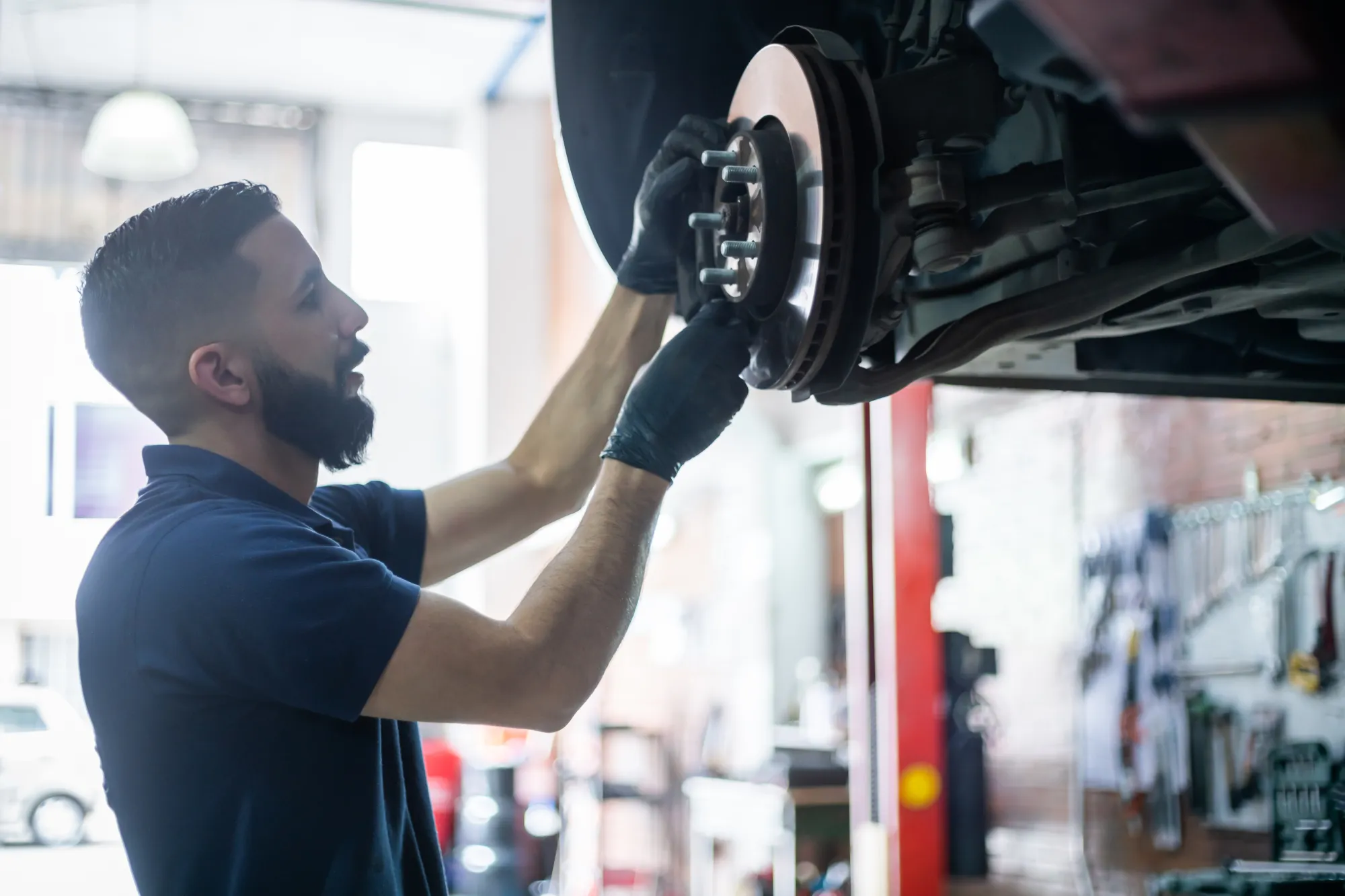
Severely scored or damaged rotors can also contribute. Repeated grab-and-release sensations may involve uneven pad deposits or rotor thickness variation. Measurements against the vehicle’s specifications help determine the appropriate rotor repair.
That makes the distinction between an abrupt first bite and repeated pulsation useful: the technician needs to know which complaint the findings must explain.
Hardware, pad fit, and caliper movement
Pad thickness is only part of the inspection. Checks should include pad fit, hardware security and condition, and whether caliper components move and release properly. Loose hardware, incorrect fit, or a seized component can be relevant findings. DBA USA advises keeping lubricant off friction surfaces.
Ask which finding explains the symptom and whether other parts were affected.
For example, if the recommendation includes caliper work, ask what the movement check showed. If replacement pads are proposed, ask whether the reason is their condition, fit, or contamination. These questions help you understand why the repair includes those parts, especially when the pads still appear to have material left.
Fluid and hydraulic condition
Fluid checks belong in the inspection, but a flush should have a reason of its own. Wagner’s brake inspection checklist recommends evaluating fluid level and condition and following manufacturer service guidance. It also explains that contaminants can collect behind a caliper piston and cause binding.
That is different from fluid or grease getting onto the braking surface. The location and nature of the problem determine the repair.
Our explanation of how brake-fluid moisture affects pedal feel provides background on fluid condition. A complaint about abrupt braking still needs its own diagnosis; it does not establish that a fluid flush will fix it.
Could vehicle-specific brake operation explain the feel?
The technician should compare the complaint with information for your exact model and equipment.
For example, Ford’s U.S.-market Fusion owner’s manual explains that brake assist responds to how rapidly the pedal is pressed. It also describes how equipped vehicles divide slowing between regenerative and friction braking, with regeneration limited when the battery is nearly full.
These examples show why pedal pressure alone does not describe every braking system. They do not prove that a new or abrupt change is normal, or that another make operates the same way.
For a hybrid complaint, a useful question is whether the observed response matches the manufacturer’s description. For any vehicle, a new change should be evaluated alongside the physical inspection findings.
How the findings determine the repair
Casey’s Tire & Brake lists inspections of pads, rotors, calipers, fluid, and lines, along with pad and rotor replacement, caliper and hydraulic line repairs, and fluid flushes when needed.
A useful repair explanation should connect three things: what you felt, what the inspection found, and how the proposed work addresses it. Ask whether the recommendation corrects a friction-surface problem, a component that binds, or a separate fluid-service need. For a current quote, ask the shop to base it on those findings.
Consider how the repair explanation would differ in these situations:
- Contamination is found: Ask what introduced it and how that source will be corrected along with the affected friction parts.
- Rotor damage is found: Ask which condition or measurement supports the recommendation and how it relates to your complaint.
- Binding is found: Ask which component failed to move or release properly and what work addresses that finding.
- Vehicle operation is the proposed explanation: Ask which manufacturer information applies to your model and whether the observed behavior actually matches it.
If fluid service is also recommended, ask whether it addresses an identified hydraulic concern or is separate maintenance. Keeping those reasons clear makes the estimate easier to understand and gives you a concrete basis for discussing the result after the work.
If the pedal sinks or brake fluid leaks, DBA USA advises against driving until inspection and repair. For less obvious changes, record the circumstances already observed and describe the symptom precisely. That gives the inspection a clear question to answer.